
Are you wondering how to become a professional chef after 12th grade in Nepal?
If yes, then becoming a professional chef might be the perfect career for you. The good news is that you can start your journey right after completing your Class 12 (plus two) in Nepal.
Many young Nepali students do not know that the cooking industry is one of the fastest-growing fields in the country and around the world. Nepal gets millions of tourists every year. All these tourists need good food. Hotels, resorts, restaurants, and cafes are always looking for trained chefs. So if you want to know how to become a professional chef after 12, you are in the right place.
In this blog, we will explain everything in very simple words. From the courses you need to join, to the colleges available in Nepal, the salary you can expect, and how far your career can go. Whether you are a student, a parent, or someone just curious about this career, this guide is made for you.
So, let’s start with knowing about the professional chef.
Professional Chef in Nepal
A professional chef is a trained culinary expert who manages kitchen operations, develops menus, and ensures high food quality for the people who are willing to eat new things.
To become the professional chef in Nepal or if you want to become a professional chef globally, you can have two options: either you can join the Diploma in Global Culinary Arts or Professional Chef Course – Advanced
How to Become a Professional Chef After 12: Starting Your Journey
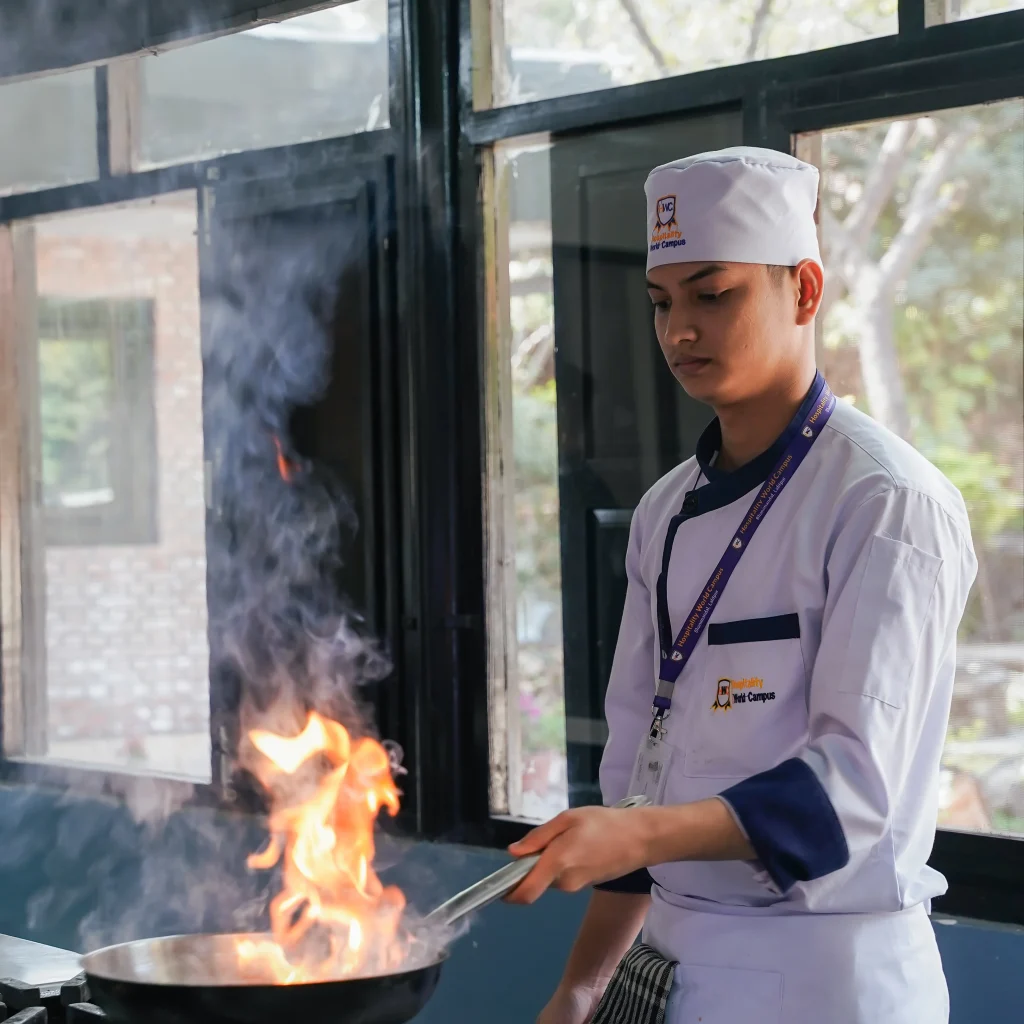
The first step to become a professional chef after 12 is to understand what a chef actually does. A chef is not just a person who cooks food. A chef plans what food to make, manages the kitchen team, checks the quality of every dish, and sometimes creates new recipes. It is a skilled job that needs proper training.
After passing your Class 12 from any stream (Science, Management, or Humanities), you are fully eligible to join a diploma in global culinary arts or hotel management program in Nepal. You do not need to have a specific background. Anyone who has a passion for food and a willingness to work hard can become a professional chef.
What Subjects Do You Need After Class 12?
The great news is that there is no specific stream required to join culinary or hotel management programs. Whether you studied Science, Commerce, or Humanities in your Class 12, you can apply. Most colleges in Nepal just require that you have completed your Plus 2 (10+2) or equivalent examination with at least 45 percent marks.
Some colleges may ask for a small entrance test or a brief interview, but there is no need to be worried. These tests are simple and focus on your basic communication skills and interest in the food industry.
Can You Start Learning Before Joining College?
Absolutely yes! Even before you join a formal course, you can start preparing at home. Try cooking different types of food at home. Watch YouTube videos about knife skills, food preparation, and basic cooking techniques. Follow Nepali chefs on social media.
Try to learn about different cuisines like Continental, Indian, and Asian food. This background practice will give you a head start when you officially begin your training. It also shows colleges and future employers that you have a genuine passion for cooking.
Courses Available in Nepal to Become a Professional Chef After 12

Nepal has many good options for students who want to study culinary arts or hotel management after Class 12. These courses range from short certificate programs that last just 3 months to full four-year degree programs. Let us look at the main types of courses available in Nepal.
Short-Term and Diploma Courses
Short-term and diploma courses are very popular in Nepal because they are affordable, practical, and you finish quickly. Here are some popular options:
- Certificate in Culinary Arts (3 to 6 months): This is a beginner-level course that teaches you basic cooking skills, kitchen hygiene, and food safety. It is a great starting point.
- Pre-Diploma in Culinary Art (6 months): This is offered by CTEVT (Council for Technical Education and Vocational Training) affiliated institutions. It teaches oriental and continental cooking styles along with computer applications.
- Diploma in Culinary Arts (9 to 12 months): A more detailed program that includes classroom learning, hands-on kitchen training, and an internship at a hotel. For example, IHTS (International Hotel Training School) in Kathmandu offers a Diploma in Culinary Arts with a 6-month internship after classroom training. The fee is approximately NPR 1,25,000 for the full program.
- Diploma in Bakery and Pastry (6 to 12 months): For students who are specifically interested in baking, cakes, breads, and desserts. This is a great option if you love sweets.
Short courses are best for students who want to start working quickly. After completing a diploma, you can immediately start applying for jobs in restaurants, hotels, and bakeries.
Bachelor Degree Programs in Hotel Management
If you want a more complete education and bigger career opportunities, you can join a Bachelor of Hotel Management (BHM) program. This is a 4-year degree program that covers everything from cooking to management, finance, and hospitality operations. As of 2024, 79 colleges in Nepal offer BHM programs, with 38 of them located in Kathmandu alone. Here are the top universities that offer BHM in Nepal:
- Tribhuvan University (TU): The most common BHM affiliation in Nepal. Requires 10+2 with at least 45 percent marks.
- Kathmandu University (KU): Offers the Bachelor in Professional Hospitality program, which is internationally accredited.
- Pokhara University: Also offers 4-year BHM programs.
- Purbanchal University: Offers BHM and even a Master of Hospitality Management program.
- International University Programs: Some colleges in Nepal are affiliated with universities like Queen Margaret University (UK), University of Sunderland, Leeds Beckett University, and Lincoln University College. These give you international degrees while studying in Nepal.
The BHM degree also includes a specialization in Culinary Arts, where you deeply study food production, kitchen management, and international cuisines. This degree opens doors to higher-level jobs in five-star hotels and international hospitality companies.
Best Colleges in Nepal to Study Culinary Arts After 12
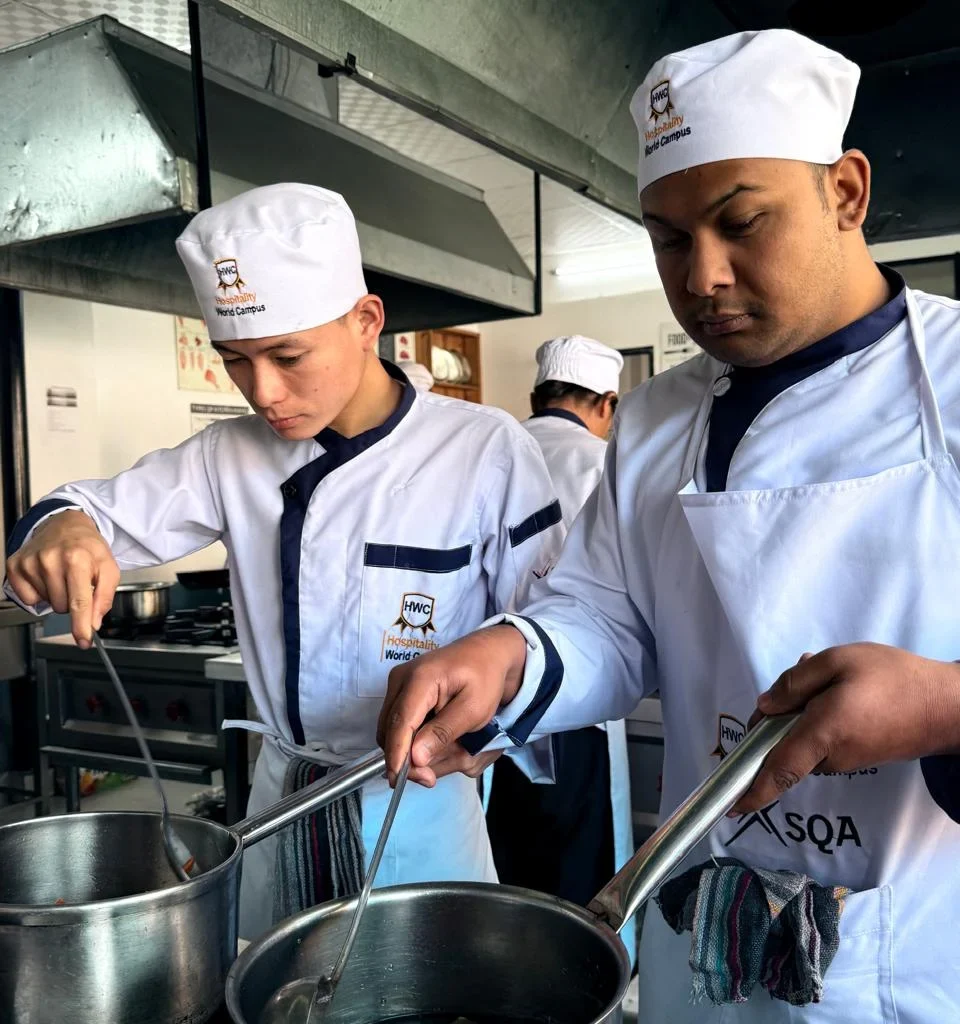
Choosing the right college is very important. A good college will not only teach you cooking skills but will also help you get internships and jobs. Here are some of the best and most trusted culinary and hotel management colleges in Nepal:
Top Culinary Colleges in Kathmandu
- HWC(Hospitality World Campus): located in Jawalakhel. It is one of the oldest and top culinary arts colleges in Nepal providing the courses like Diploma in Global Culinary Arts, Diploma in Hospitality Mangement, Diploma in Barista and Bartending, and many more.
- IHTS (International Hotel Training School), Old Baneshwor, Kathmandu: IHTS is one of the most well-known culinary arts academies in Nepal. It is led by experienced chefs and hotel directors from 5-star hotels. IHTS offers diplomas in Culinary Arts, Bakery and Pastry, and other short courses. They have internship placements in Malaysia, Thailand, and China.
- IHM College (College of International Hotel Management), Satdobato, Lalitpur: IHM is known for its hands-on, no-textbook approach to culinary training. They have 100 percent job placement support globally and offer internships in 5-star hotels inside Nepal. Over 500 students have already graduated and found placement from IHM.
- Academy of Culinary Arts and Hospitality Management (ACA), Lagankhel, Lalitpur: ACA is affiliated with Lincoln University College of Malaysia and offers 4-year BHM programs. Their graduates have worked in top international hotels in Dubai, Australia, and beyond.
- NATHM (Nepal Academy of Tourism and Hotel Management), Kalimati, Kathmandu: A government-supported institution that offers hotel and tourism management programs at affordable fees.
Top Culinary College Outside Kathmandu
- Kantipur Tourism and Hotel Management College, Pokhara: This is considered one of the best culinary training colleges outside Kathmandu. It is accredited as a National Skill Testing Board (NSTB) center for culinary arts in Province 4. They offer Australian Certificate level training in Hotel Management, Culinary Arts, and Pastry and Baking. Their students have been placed as Executive Chefs in hotels like Dusit Thani in Qatar and on Cunard Cruise Lines in Miami.
When choosing a college, always check if they offer practical kitchen training, internship placements in real hotels, and job support after graduation. A good internship can change your career completely.
Skills You Need to Become a Professional Chef After 12
Cooking is not just about knowing recipes. To become a truly great professional chef, you need to develop a mix of technical and personal skills. Here are the most important ones:
Technical Cooking Skills
- Knife Skills: A chef must know how to cut, slice, and chop vegetables, meat, and other ingredients quickly and safely. This is one of the first things you learn in culinary school.
- Understanding of Ingredients: You need to know which ingredients go together, how they change when cooked, and how temperature affects food texture and taste.
- Food Safety and Hygiene: This is extremely important. Every professional kitchen must follow strict food safety rules. You need to know how to store food properly, prevent contamination, and maintain a clean kitchen.
- Knowledge of Cuisines: A good chef understands multiple types of cuisines. In Nepal, the demand is high for chefs who know Nepali, Indian, Continental (Western), and Asian cooking styles.
- Baking and Pastry Basics: Even if you are not a pastry chef, knowing basic baking skills is a big plus.
Personal Skills and Attitude
- Passion for Food: You must genuinely love food and cooking. Without passion, it is very hard to succeed in this field.
- Hard Work and Patience: The kitchen is a tough place. Long hours, high heat, and pressure are common. You need to be strong and patient.
- Creativity: Great chefs create new dishes and find new ways to present food. Being creative with flavors and looks will help you stand out.
- Teamwork: A kitchen is a team. You need to work well with other cooks and staff.
- Time Management: In a busy restaurant, many dishes need to be ready at the same time. Managing your time perfectly is essential.
During your culinary training in Nepal, all these skills will be taught and practiced. But you should also make effort outside the classroom to keep improving every day.
Chef Career Growth Path in Nepal
One of the best things about the culinary profession is that there is a clear path to grow. You start from the bottom and slowly move up. Here is what the career ladder of a chef looks like in Nepal and internationally:
Step by Step Career Ladder for a Chef
- Commis Chef (Junior Cook): This is the starting position. You follow instructions, do basic prep work like cutting vegetables, and learn from senior chefs. This is where everyone starts.
- Demi Chef / Chef de Partie (Station Chef): After 2 to 3 years of experience, you take charge of one specific section of the kitchen, like the grill section, pastry section, or soup section.
- Sous Chef (Second in Command): After about 5 to 7 years, you become the second most important person in the kitchen. You help the Head Chef run the kitchen and manage the team.
- Head Chef / Executive Chef: After 8 to 10 years of hard work, you can become the Head Chef or Executive Chef. You manage the entire kitchen, plan menus, control food costs, and lead the full kitchen team. This is the top position.
It usually takes about 8 to 10 years of hard daily work in a busy kitchen to reach the Executive Chef level. But with the right training, internships in good hotels, and a strong work ethic, you can move up faster.
Can You Work Abroad After Becoming a Chef in Nepal?
Yes, absolutely! This is one of the biggest advantages of becoming a chef in Nepal. After getting 2 to 3 years of real kitchen experience in Nepal, it becomes much easier to find high-paying chef jobs in countries like Dubai, Qatar, Australia, the Maldives, Malaysia, or on international cruise ships. Many Nepali chefs already work in these places and earn very good salaries.
Working in a busy Nepali hotel kitchen is actually great preparation for international jobs because it teaches you to handle pressure and work long hours. Some Nepali pastry chefs working in Dubai and the Maldives earn between NPR 1,50,000 to 3,00,000 per month.
Salary of a Professional Chef in Nepal
Many students wonder how much money a chef earns in Nepal. The truth is, your salary as a chef depends on your experience, the place where you work, and your skills. Here is a general idea of what you can expect:
Salary at Different Career Levels in Nepal
- Entry-Level Chef or Commis: When you first start, expect to earn between NPR 15,000 to NPR 25,000 per month. This is for freshers who have just completed their training or diploma.
- Experienced Chef (3 to 5 years): With some years of experience, you can earn between NPR 30,000 to NPR 60,000 per month in a mid-to-senior role at a good hotel or restaurant.
- Head Chef or Executive Chef: Senior chefs in 5-star hotels and top restaurants in Nepal can earn up to NPR 90,000 per month or more.
- International Jobs: Chefs who go abroad for work can earn much more. In Dubai or Qatar, monthly earnings can go up to NPR 1,50,000 to NPR 3,00,000 depending on the hotel and position.
While the starting salary in Nepal may seem low, the growth potential is huge. As you gain more skills and experience, your value in the job market increases rapidly. Plus, if you start your own food business like a restaurant, cafe, or bakery, the income potential is unlimited.
Other Ways to Earn as a Chef in Nepal
- Food Blogging and YouTube: With the rise of social media, many Nepali chefs are now earning money by sharing recipes and cooking videos online. If you have good digital skills, you can build a strong following and earn through ads and sponsorships.
- Catering Business: You can start a catering service for weddings, parties, and corporate events. This is a growing market in Nepal.
- Own Restaurant or Bakery: After getting experience in hotels, many chefs open their own small restaurants, cafes, or bakeries. Many culinary courses in Nepal now include entrepreneurship modules to teach you how to run your own food business.
- Private Chef: Wealthy families, embassies, and high-profile individuals sometimes hire private chefs. This can be a well-paying job with good working conditions.
Common Mistakes to Avoid When Trying to Become a Professional Chef After 12
Many students make some common mistakes when they start their culinary journey. Knowing these mistakes beforehand will help you avoid them and move forward faster.
Mistakes in Education and Training
- Choosing a college without checking its kitchen facilities: A culinary school without a proper training kitchen is not worth joining. Always visit the college and check the kitchen labs before enrolling.
- Skipping the internship: Some students try to skip the internship period because it pays less money. This is a big mistake. Internship in a real hotel kitchen is where you actually learn the most. Never skip it.
- Only focusing on cooking and ignoring food safety: Many students love the cooking part but find hygiene and food safety boring. But food safety is the most important part of being a professional chef. Hotels and restaurants will not hire you if you do not have proper knowledge of hygiene standards.
- Expecting instant high salaries: As a fresher, you will start with a low salary. Do not get discouraged. Focus on learning and building your skills. The salary will increase as your experience grows.
Mistakes in Career Attitude
- Giving up too quickly: The kitchen is a hard environment. It is hot, fast-paced, and stressful. Many students quit too soon. Stay committed and keep going. Every experienced chef has gone through these tough days.
- Not being curious about food: Good chefs are always curious. They try new ingredients, visit food markets, taste different foods, and never stop learning. If you just cook the same things without curiosity, you will not grow.
- Not building a professional network: In Nepal’s hotel and restaurant industry, knowing the right people matters. Connect with your teachers, senior chefs, and hotel managers. These connections can help you find better jobs in the future.
Future of the Chef Profession in Nepal
The future looks very bright for professional chefs in Nepal. Here is why:
Growing Tourism and Hotel Industry
Nepal is one of the most popular tourist destinations in the world. Millions of trekkers, mountain climbers, and cultural tourists visit Nepal every year. To serve this growing number of tourists, new hotels and restaurants are opening across the country. The number of five-star hotels in Kathmandu has increased sharply in recent years, with the addition of properties like Kathmandu Marriott Hotel, Aloft Kathmandu, Hyatt Place Kathmandu, and others.
New boutique hotels and resorts are also opening in places like Thamel, Pokhara Lakeside, Nagarkot, Sarangkot, and Chitwan. All of these places need skilled, trained chefs. The hospitality sector already contributes about 2.5 percent to Nepal’s GDP according to the Central Bureau of Statistics, and this number is expected to grow further. This means more jobs, better salaries, and more opportunities for professional chefs in Nepal.
Rise of Cafe Culture and Food Businesses
Another exciting trend in Nepal, especially in cities like Kathmandu and Pokhara, is the rise of cafe culture. Young Nepali entrepreneurs are opening specialty coffee shops, bakeries, fusion restaurants, and dessert cafes. This creates a new and exciting job market for chefs who have skills in pastry, baking, and modern cuisines. There is also a big demand for chefs who can create fusion dishes that combine traditional Nepali flavors with international cooking styles. If you can cook a momos-inspired pizza or a Newari-inspired pasta, you have a very special skill set that is in high demand. The growing food delivery market through apps is also creating demand for cloud kitchen chefs who cook only for home delivery orders.
Final Words: Your Path to Becoming a Professional Chef After 12
If you have a passion for food and a strong desire to work hard, then becoming a professional chef after 12 is absolutely possible in Nepal. The path is clear. Finish your Class 12, join a good culinary course or hotel management college, complete your internship in a real hotel, and keep learning and improving every day.
Nepal’s growing hotel industry, the rise of cafes and food businesses, and the increasing demand for trained Nepali chefs both at home and abroad make this one of the most exciting career choices you can make right now. Start small, be patient, stay curious about food, and never stop learning. Whether you want to become the Executive Chef of a 5-star hotel, open your own restaurant, or work on a luxury cruise ship, the journey starts today with a single decision to take cooking seriously.
Remember: Every great chef started exactly where you are right now. The only difference between a dream and a real career is the action you take today. So go ahead, take that first step, and start your journey on how to become a professional chef after 12 in Nepal.
Frequently Asked Questions About How to Become a Professional Chef After 12 in Nepal
Can I become a professional chef directly after Class 12 in Nepal?
Yes. You can join a Diploma in Culinary Arts or Certificate course right after completing your Class 12 from any stream. Many colleges accept students with 45 percent or above in Plus 2.
How long does it take to become a professional chef after Class 12?
A diploma course takes 9 to 12 months. A full BHM degree takes 4 years. After training, you will start as a junior chef and typically reach the Head Chef or Executive Chef level after 8 to 10 years of kitchen experience.
How much does it cost to study culinary arts in Nepal?
Short certificate courses can cost as little as NPR 30,000 to NPR 50,000. Diploma programs cost around NPR 1,00,000 to NPR 1,50,000. Full BHM degree programs cost between NPR 3,00,000 to NPR 8,00,000 or more depending on the college and university affiliation. Some institutions like IHM offer scholarships of up to 50 percent for deserving students.
Is being a chef a good career in Nepal?
Absolutely yes. With Nepal’s growing tourism industry, increasing number of 5-star hotels, and the rise of food businesses, the demand for trained chefs is increasing every year. Starting salaries may be modest, but the career has very strong long-term growth potential, especially for those who gain international experience.