
Introduction
If you are looking for a hospitality training institute near Kathmandu, Hospitality World Campus (HWC) is one name worth knowing first. HWC offers programs ranging from short-term barista and bakery courses to full diplomas and advanced diploma in hospitality management all with practical, hands-on training designed to get students job-ready. But this guide is not just about one institute. It will help you understand the full picture of hospitality education near Kathmandu, so you can make the right decision for your future.
Why Hospitality Education is Growing Around Kathmandu
Nepal’s hospitality industry is not slowing down. According to a January 2025 survey, the food and accommodation sector alone generates more than Rs 326 billion annually and directly employs over 106,000 people across 142,223 establishments. International visitor arrivals reached 1,147,567 in 2024 a 13.1% jump over the previous year. And in Bagmati Province, which includes Kathmandu, hotel investments and guest arrivals are both rising. International brands like IHG Hotels and Resorts and Hyatt Centric have open job listings in Kathmandu and Pokhara right now in 2026. The demand for trained hospitality professionals has never been clearer.
The result? More students are turning to hospitality training as a serious career path. Not as a backup plan but as a first choice. This guide gives you everything you need to understand why, and how to pick the right institute.
Who Should Read This Guide?
- SEE graduates who want to enter the workforce quickly with practical, job-ready skills
- +2 completers exploring hotel management and culinary arts as a career
- Students who want short-term courses in barista training, bakery, or front office
- Working professionals looking to upgrade their hospitality skills for better pay or international jobs
What You Will Learn in This Blog
- What hospitality training actually covers and why it is different from regular academic education
- Why Kathmandu is the best place in Nepal to study hospitality
- Types of courses available near Kathmandu from short certifications to full diplomas
- How to choose the right institute based on facilities, internships, and placement support
- Real salary figures and international job opportunities after your training
What is hospitality training?
Understanding Hospitality Education
Hospitality training is the process of learning how to serve guests, run food and beverage operations, manage hotel departments, and work professionally in the tourism and service industry. It is different from a standard academic degree in one important way: you spend a large part of your time actually doing things cooking in a real kitchen, checking in guests at a front desk, setting up a banquet, and practicing how you speak and carry yourself in a professional environment.
Traditional education gives you theory and asks you to apply it later. Hospitality training puts you in situations that mirror real work from day one. This is why employers in Nepal and abroad prefer graduates who have gone through certified hospitality programs over candidates who have no formal training.
Main Areas Covered in Hospitality Training
- Hotel management: Operations, front office, housekeeping, sales, and guest relations
- Culinary arts and cooking: Professional kitchen skills, food preparation, and food safety
- Bakery and pastry: Bread making, cake decoration, pastry production, and dessert preparation
- Barista and bartending: Espresso-based drinks, coffee techniques, and beverage service
- Front office operations: Reservations, check-in and check-out, guest handling, and PMS software
- Housekeeping and customer service: Room setup, cleaning standards, and guest care
Skills Students Learn in Hospitality Institutes
Beyond technical skills, hospitality training builds the kind of professional you become. The real learning includes:
- Communication: Speaking clearly with guests from different countries, handling complaints calmly, and writing professional emails and messages
- Guest handling: Reading what a guest needs before they ask, solving problems quickly, and turning a difficult situation into a positive one
- Leadership and teamwork: Hospitality runs on coordinated teams. You learn to follow instructions precisely, then eventually to lead your own team
- Professional grooming and etiquette: How you look, how you stand, how you greet guests. These things matter enormously in hospitality, and they are formally trained, not assumed
Why Kathmandu is a Hub for Hospitality Training in Nepal
Presence of Nepal’s Top Hotels and Tourism Businesses
Kathmandu is Nepal’s capital and its main tourism entry point. Almost every international tourist who comes to Nepal passes through Kathmandu. The valley is home to the country’s largest concentration of four-star and five-star hotels, international restaurant chains, airline offices, tour operators, and event management companies. For a hospitality student, this concentration of industry creates something that no other city in Nepal can match: constant, real exposure.
When you study hospitality near Kathmandu, you are not learning in isolation. Your institute is surrounded by working hotels, busy restaurants, and active event venues. Internship opportunities at properties like Marriott, Hyatt Centric, and Dwarika’s which are all based in Kathmandu are accessible in a way they are simply not in smaller cities.
Better Career and Networking Opportunities
Nepal’s hotel recruitment events, hospitality fairs, and industry workshops largely happen in Kathmandu. This matters more than students realize. The connections you build during your training period — with hotel HR managers, event coordinators, senior chefs, and F&B managers — often become the direct bridge to your first job. Many students receive job offers not through formal applications but through the relationships they built during internship and training. Being near Kathmandu puts you inside that network from day one.
Availability of Practical Hospitality Facilities
Quality hospitality institutes near Kathmandu invest in proper training infrastructure: professional-grade kitchens with commercial equipment, front office lab setups that mirror actual hotel reception desks, housekeeping training rooms with proper linen and cleaning tools, and training restaurants where students serve real guests. This kind of infrastructure is difficult to build and maintain outside major cities, which is why Kathmandu-based training tends to be more thorough in practice than regional alternatives.
Best Hospitality Training Institutes Near Kathmandu
Here are some of the best hospitality training institutes near Kathmandu for hotel management, culinary arts, tourism, bakery, and hospitality-related professional courses.
1. Hospitality World Campus (HWC)

Located in Jawalakhel, Lalitpur, Hospitality World Campus (HWC) is one of the growing hospitality education institutions in Nepal. HWC offers internationally benchmarked programs such as Diploma in Global Culinary Arts, Diploma in Hospitality Management, and Advanced Diploma in Hospitality Management. Their programs are quality assured by the Scottish Qualifications Authority (SQA), Scotland, helping students gain globally recognized hospitality skills. The institute focuses heavily on practical learning, internships, communication skills, and industry exposure, making it suitable for students looking for careers in hotels, restaurants, cruise lines, airlines, and tourism industries.
2. Kathmandu Institute of Hospitality Management
KIHM is a well-known hospitality institute in Lalitpur that provides vocational hospitality education affiliated with CTEVT. The institute offers diploma and advanced diploma programs in hospitality management along with practical hospitality training. KIHM emphasizes communication skills, hotel operations, and tourism industry readiness.
3. International Hotel Training School (IHTS)
IHTS is popular for culinary arts, bakery, front office, and hotel management training. The school is known for hands-on practical training and industry-oriented hospitality programs. Many students join IHTS for bakery, pastry, and culinary specialization courses.
4. Silver Mountain School of Hotel Management
Silver Mountain is one of Nepal’s recognized hotel management schools offering hospitality education with international exposure. It is known for professional hospitality training, industry internships, and hotel management degree pathways.
5. Nepal School Of Hotel Management
This institute offers professional hotel management and hospitality training programs focused on practical hotel operations, culinary arts, and tourism-related skills. It has strong student reviews and practical training facilities.
6. Worldwide Institute of Hotel Management
Located in Lalitpur, this institute provides hospitality and hotel management courses designed for students seeking careers in hotels, restaurants, cruise industries, and tourism sectors.
7. Ouzo Institute of Hotel Management- Basundhara, Kathmandu
Ouzo Institute is known for practical hotel management, barista, bakery, and culinary training. Students often choose this institute for skill-based hospitality education and short professional courses.
8. Shangri-La Hotel Training Center
This training center provides hospitality-related vocational and professional skill training in Kathmandu. It is known for hospitality operational training and service-focused learning.
9. Greenland Hotel Management & Sushi Training Institute
Greenland Institute specializes in hotel management, sushi training, bakery, and culinary arts programs with practical hospitality training modules.
10. Nepal College of Travel and Tourism Management – NCTTM
NCTTM focuses on tourism management, travel operations, and hospitality-related academic programs designed for students interested in tourism and hotel sectors.
Types of Hospitality Courses Available Near Kathmandu
Diploma in Hotel Management
A Diploma in Hotel Management (DHM) is typically a one to two year program open to both SEE graduates and +2 completers. It covers the core departments of hotel operations: front office, food and beverage service, housekeeping, and basic culinary skills. A diploma is the fastest formal route into the hotel industry with proper credentials.
After completing a diploma, graduates can take up roles as front office assistants, food and beverage service staff, or housekeeping supervisors. With two to three years of experience, they can advance to supervisory and team leader roles. The diploma also serves as a foundation for students who want to continue to an Advanced Diploma or bachelor’s program later.
Culinary Arts and Professional Chef Courses
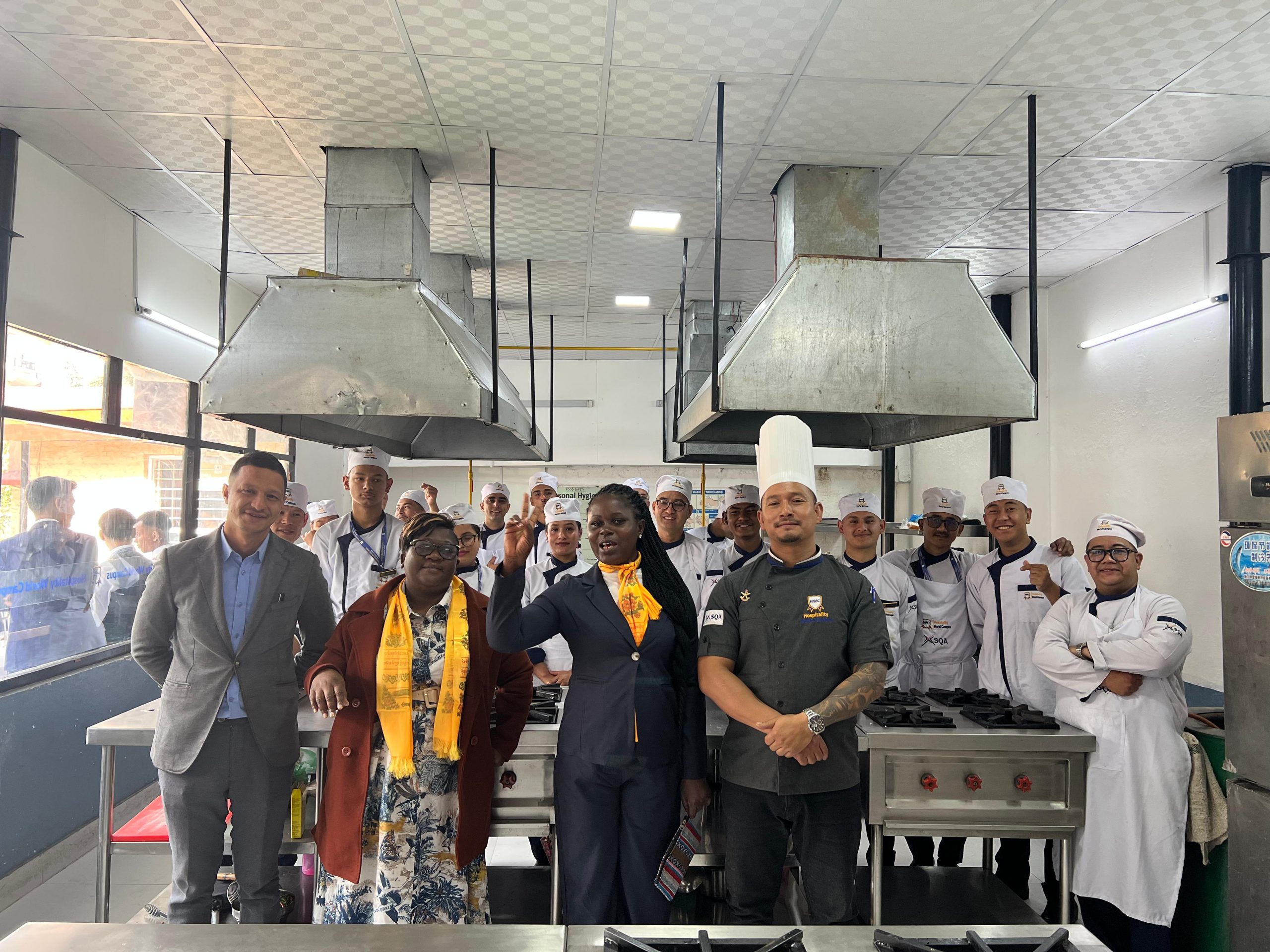
Chef courses in Nepal are growing in demand as the restaurant industry expands and international hotel properties raise their kitchen standards. A professional chef course covers knife skills, cooking techniques, food safety and sanitation, menu planning, kitchen organization, and a range of cuisines from Nepali to Continental, Asian, and bakery.
Entry-level chefs in Nepal start at NPR 12,000 to 20,000 per month at small restaurants, and NPR 18,000 to 26,000 per month at four-star and five-star Kathmandu hotels. With three to six years of experience, a Chef de Partie can earn NPR 45,000 to 90,000 monthly. Executive chefs at top Kathmandu properties earn NPR 90,000 to NPR 150,000 or more per month. The gap between entry and expert is wide — and it is filled by the quality of your training and your consistency in the kitchen.
HWC offers both a Professional Chef Course (Advanced) and a Diploma in Global Culinary Arts (DGCA) — both designed for students who want to build a serious career in the kitchen rather than just learn basic cooking.
Bakery, Barista, and Short-Term Hospitality Courses
Not every student wants or needs a full diploma. Short-term hospitality courses are ideal for students who want to start working quickly, launch a small food business, or add a specific skill to their existing career. The most popular short-term options near Kathmandu include:
- Barista training: Learning espresso extraction, milk steaming, latte art, and cafe operations. Nepal’s cafe culture in Kathmandu and Pokhara is growing fast, creating real demand for trained baristas.
- Bakery and pastry courses: Bread, cakes, pastry, and dessert production. These skills are valuable for working in hotel bakeries, independent bakeries, or starting your own business.
- Front office and housekeeping courses: Short, skill-focused programs for students who want to enter hotel operations quickly without a full diploma.
HWC offers a Certificate in Bakery, Pastry and Patisserie and a Professional Certificate in Barista and Bartending — both practical, short-format programs with direct career application.
How to Choose the Best Hospitality Training Institute Near Kathmandu
Check Practical Training Facilities
Before you commit to any institute, visit in person and ask to see the training kitchen, the front office lab, and the housekeeping training room. If the kitchen has commercial-grade equipment real stoves, ovens, prep stations and the front office area looks like an actual hotel reception, that is a good sign. If the ‘practical lab’ is a demonstration room where the instructor cooks while students watch, that is not real practical training.
The ratio of practical hours to classroom hours also matters. In a quality hospitality program, practical sessions should account for at least 40 to 50 percent of the total training time. Ask the institute directly: how many hours per week are hands-on, and what exactly do students do during those sessions?
Look at Internship and Placement Support
The internship is often the most important part of hospitality training. It is where classroom skills meet real work, where you build your professional network, and where your first job offer often comes from. Ask every institute you visit the same questions:
- Which hotels are your internship partners? Are these properties you have actually heard of three-star, four-star, or five-star hotels with real operational standards?
- How does the placement process work? Does the institute introduce you to hotel HR managers, or do students find internships on their own?
- What percentage of last year’s batch found employment within six months of completing the course?
Institutes that cannot answer these questions specifically — or give vague answers — likely do not have strong industry connections. This matters enormously for your career start.
Compare Course Fees and Value
Hospitality training fees near Kathmandu vary widely based on the level and duration of the course. Short-term courses (barista, bakery) typically cost NPR 15,000 to 50,000. Diploma programs range from NPR 80,000 to 200,000 depending on duration and institute. Advanced diploma or management-level programs can go up to NPR 300,000 to 500,000 for the full course duration.
Fee alone is not a reliable measure of quality. A more expensive program at an institute with weak practical facilities and no hotel internship connections is worse value than a moderately priced program at an institute with real industry partnerships. Focus on what you get for the fee: practical hours, equipment quality, internship access, and placement support.
Facilities to Look for in a Hospitality Institute
Modern Training Kitchens and Labs
A professional training kitchen is not optional it is the core of any culinary or hotel management program. Look for institutes with commercial ovens, proper stoves and cooktops, refrigeration and cold storage, clean prep areas, and individual workstations where each student can cook rather than only observe. The same standard applies to front office labs, which should have reservation software, communication systems, and a realistic reception layout.
Experienced Hospitality Trainers
The person teaching you kitchen skills should have actually worked in a hotel or restaurant kitchen. The person teaching front office operations should have actually managed a hotel reception. Industry experience in the instructor is not a bonus it is a requirement for effective hospitality education. Ask each institute: what is the professional background of your lead trainers? Have they worked in four-star or five-star hotels? Do they have international experience?
Instructors who combine real hotel experience with teaching ability will show you things that no textbook covers — how a busy Saturday kitchen actually operates, what a hotel GM expects from a new front desk executive, how to handle a difficult guest without losing your composure. That kind of knowledge can only come from someone who has lived it.
Personality Development and Communication Classes
This is one area many students overlook when choosing an institute and it is one of the most valuable things hospitality training provides. English communication training, professional grooming, public speaking practice, and guest interaction role plays are all part of a complete hospitality curriculum. If an institute does not have these as a structured part of the program, what you get is technical skill without the professional presentation needed to use it at a high level.
At Hospitality World Campus (HWC), personality development is built into the program through the mentoring system each student meets individually with a mentor monthly, and soft skills training runs alongside technical training throughout the course.
Career Opportunities After Hospitality Training
Hotel and Resort Jobs
Hotels and resorts remain the primary employer of hospitality graduates in Nepal. The most common entry-level roles include:
- Front Office Executive: Managing guest check-in, check-out, reservations, and communication. This is often the first role for diploma graduates with strong communication skills.
- Food and Beverage Service Staff: Restaurant service, banquet service, and room service operations. F&B roles require attention to detail, service etiquette, and energy.
- Housekeeping Staff and Supervisors: Maintaining room cleanliness, linen management, and public area upkeep. Housekeeping supervisors at luxury properties have significant responsibility and reasonable pay.
Kathmandu has the highest concentration of hotel jobs in Nepal. Properties ranging from boutique hotels in Thamel to five-star resorts in the outskirts of the valley regularly hire trained hospitality graduates. Job portals like Kumari Job and Neco Jobs show consistent new openings in Kathmandu’s hotel sector every week.
Culinary and Bakery Careers
Trained chefs are in genuine shortage across Nepal. As international hotel brands set higher kitchen standards and as Kathmandu’s restaurant scene continues to grow, the demand for formally trained culinary professionals keeps rising. Entry-level commis chefs at five-star hotels in Kathmandu start at NPR 18,000 to 26,000 per month. By mid-career — three to six years in — a Chef de Partie earns NPR 45,000 to 90,000 monthly. Head chefs and executive chefs at top properties earn NPR 90,000 to 150,000 or more.
Bakery and pastry is a growing niche with specific demand. Specialized pastry chefs with proper training earn NPR 60,000 to 90,000 at established hotel properties. The bakery business also offers clear entrepreneurship potential — Kathmandu’s growing demand for quality bread, cakes, and pastry products means a skilled baker with business sense can build a real customer base.
Entrepreneurship Opportunities
Hospitality training gives you the skills to work for others — and the knowledge to eventually work for yourself. Students who complete hotel management or culinary programs and want to start their own business have real advantages: they understand food cost and menu pricing, they know hygiene and safety standards, they can manage a small team, and they understand what guests actually want from a food or accommodation experience.
Practical entrepreneurship options for hospitality graduates in Nepal include starting a specialty cafe, a bakery, a catering business, a community homestay, or a small restaurant. Nepal’s growing domestic tourism and food culture create genuine market space for well-run small hospitality businesses — especially those that offer a distinct product or experience.
Salary and Job Scope After Hospitality Courses in Nepal
Entry-Level Hospitality Salaries
Entry-level hospitality salaries in Nepal range from NPR 12,000 to NPR 30,000 per month, depending on the role and the property. At small restaurants and guesthouses, waiters and receptionists typically start at NPR 12,000 to 18,000. At three-star and four-star hotels in Kathmandu, trained graduates with a diploma start at NPR 18,000 to 30,000. Five-star properties pay NPR 22,000 to 35,000 for entry-level diploma holders in operations roles.
On top of base salary, many hotel positions include practical benefits: meals provided during shift, accommodation allowances if the property is outside the city, uniforms, and service charge sharing — which at busy hotels can add NPR 5,000 to 12,000 per month on top of the base salary. For fresh graduates, these benefits are meaningful additions to the total compensation.
Internship stipends during training range from NPR 8,000 to 15,000 per month. The stipend is secondary — the real value of internship is the work experience, the industry contacts, and the performance review that often becomes your first job reference.
Career Growth in Hospitality Industry
Hospitality is one of the few industries in Nepal where growth is genuinely performance-based. A motivated diploma graduate who works hard during internship, takes every shift seriously, and continuously improves can reach supervisor level within two years and team leader or junior manager level within four to five years. With mid-level experience, salaries reach NPR 30,000 to 60,000 per month. Department heads and operations managers at quality hotels earn NPR 60,000 to 120,000 or more.
The hotel industry also rewards specialist skills. A front office executive who becomes fluent in Mandarin or Japanese becomes significantly more valuable in Kathmandu’s hotel market. A chef who develops expertise in a specific cuisine commands higher pay. Continuous skill building is both possible and clearly rewarded in this industry.
International Hospitality Job Opportunities
This is where the earning potential of hospitality training becomes most visible. Nepali hospitality workers are consistently hired in Qatar, the UAE (Dubai), Kuwait, Bahrain, Oman, the Maldives, Malaysia, and Australia. International hotel employers in these countries — including Marriott, Hilton, Accor, and IHG properties regularly recruit trained Nepali hospitality staff because of their reputation for genuine warmth and service discipline.
A front office executive earning NPR 22,000 in Kathmandu can earn the equivalent of NPR 80,000 to 130,000 per month in Qatar or the UAE — with accommodation, meals, transport, and medical insurance all provided by the employer. The net savings potential is dramatically higher. More importantly, working internationally adds a credential to your career that is recognized wherever you go next. Many Nepali hospitality professionals who spend three to five years abroad return home to take senior management roles at a level they could not have reached as quickly through domestic experience alone.
Benefits of Studying Hospitality Near Kathmandu
Better Industry Exposure
Kathmandu gives you direct access to Nepal’s most active hospitality market. The Bagmati Province, which includes Kathmandu Valley, has witnessed the largest hotel investment in Nepal’s history and continues to see rising guest arrivals. Studying hospitality here means your internship is likely in a property that is genuinely busy not a slow guesthouse with minimal operations, but a working hotel with real service demands that teach you real skills under pressure.
Higher Chances of Practical Learning
The density of hospitality businesses near Kathmandu means that the practical learning opportunities extend beyond your institute’s walls. Guest interaction and service practice happen in real restaurants you can visit, real cafes where trained baristas work, and real hotels where you can observe and eventually participate in professional operations. This environmental exposure accelerates learning in ways that are hard to replicate in cities with fewer hospitality businesses.
Easier Access to Career Opportunities
When you complete your training near Kathmandu, you are also completing it in the city where most of Nepal’s hospitality job openings are posted. Recruitment events, hotel job fairs, and industry gatherings are concentrated in Kathmandu. Even if you eventually want to work in Pokhara, Chitwan, or abroad, starting your career search from Kathmandu where you have built industry connections during your training gives you a practical advantage over graduates from smaller cities who have to travel to access the same opportunities.
Challenges Students Should Know Before Joining Hospitality Training
Hospitality Industry Requires Patience and Discipline
Let us be direct about the realities. Hotels and restaurants do not run on a nine-to-five schedule. Your shifts will include mornings starting at 6 AM, evenings ending at 11 PM, and sometimes nights. Weekends and public holidays when friends and family are resting will often be your busiest days. During tourist seasons and festivals, the pressure is higher and the hours are longer. This is not unique to Nepal it is the nature of the hospitality industry globally. Students who go in with clear eyes about this reality adjust much better than those who are surprised by it after starting work.
Practical Learning Can Be Demanding
Hospitality training is not just about sitting in class and watching demonstrations. You will be in the kitchen for hours learning to do things repeatedly until they are correct. You will serve guests at a training restaurant and be evaluated on your posture, your speech, and your speed. You will practice grooming standards daily. This level of attention to detail can feel demanding at first but it is exactly what makes hospitality graduates stand out when they enter the workforce. The discipline built during training is the discipline that impresses hotel managers during internship.
Competition in Hospitality Careers
More students are entering hospitality every year as the industry grows, which means competition for the best entry-level positions is increasing. The way to stand out is straightforward: invest in your practical skills, maintain professional grooming and communication, learn at least one additional language (even basic Mandarin, Japanese, or Arabic gives you an edge in Nepal’s hotel market), and build genuine relationships with hotel industry professionals during your internship. Your reputation in the industry grows from your very first shift take it seriously from day one.
Is Hospitality Training Worth It in Nepal in 2026?
Growing Demand for Hospitality Professionals
The data is clear. Nepal’s hospitality industry generated Rs 326 billion in 2024, tourism arrivals grew 13.1% in that same year, and the Nepal Tourism Board’s target is 1.5 million visitors annually by 2025-2026. The hotel industry generated 311,125 jobs in 2022 with projections showing growth to over 412,000 jobs by 2033. Eighteen new five-star hotels are currently under development across Nepal. International brands are entering the market. And yet, as reported in the Kathmandu Post in July 2025, hotels across Nepal are actively struggling to find and retain trained hospitality staff with many properties short-staffed despite offering steady employment.
The gap between supply and demand for trained hospitality professionals is real and measurable. Entering this field now in 2026 means entering a market where your skills are in active demand.
Strong Career Opportunities in Nepal and Abroad
Hospitality is genuinely one of the most portable careers available to Nepali graduates. The skills you learn guest handling, food preparation, hotel operations, professional communication are needed in hotels, restaurants, airlines, cruise lines, and resorts in virtually every country. This portability is not theoretical; thousands of Nepali hospitality workers are employed across the Gulf, the Maldives, Malaysia, and Australia right now, earning three to five times their Nepal salary with employer-provided accommodation and benefits.
Why Hospitality Remains a Smart Career Choice
Hospitality is a skill-based field where your effort directly determines your progress. It is open to SEE graduates and +2 completers alike. It offers a clear path from entry level to management without requiring years of academic study before you can earn. It provides international career mobility that few other fields match. And if you want to be your own boss someday, the business knowledge and customer service skills you build in hospitality are directly transferable to running a food business, a cafe, or a guesthouse of your own.
Frequently Asked Questions (FAQs)
Which is the best hospitality training institute near Kathmandu?
There are several quality institutes near Kathmandu including KIHM, IHTS, LPSHM, and Shangri-la Training Center. Among them, Hospitality World Campus (HWC) is a strong choice for students looking for practical, career-focused training with personal mentorship, small class sizes, and a range of courses from short certificates to advanced diplomas. The best institute for you depends on which course you need, your budget, and the quality of their internship partnerships so always visit and ask questions before enrolling.
What courses are available in hospitality institutes near Kathmandu?
Courses range from short-term certificates (barista training, bakery, front office) lasting a few weeks to a few months, to diploma programs in hotel management lasting one to two years, and advanced diplomas in hospitality management running two years or more. The right course depends on how quickly you want to enter the workforce and what area of hospitality interests you most.
What is the fee for hospitality training in Nepal?
Short-term hospitality courses near Kathmandu typically cost NPR 15,000 to 50,000. Diploma programs range from NPR 80,000 to 200,000 depending on the duration and institute. Advanced diploma programs can cost NPR 300,000 to 500,000 for the full program. Always confirm what is included in the fee some institutes charge separately for uniform, equipment, and exam fees.
Can I study hospitality after SEE?
Yes. Many hospitality institutes near Kathmandu accept SEE graduates directly into diploma programs. You do not need to complete +2 before starting your hospitality training. This is one of the fastest pathways from SEE to earning a real income, since a one-year diploma program followed by internship can have you working in a hotel within 12 to 18 months of finishing your SEE exams.
Is hospitality training good for working abroad?
Yes, and it is one of the most reliable paths to skilled international employment available to Nepali graduates. Countries like Qatar, Dubai (UAE), Kuwait, Bahrain, the Maldives, Malaysia, and Australia actively hire trained Nepali hospitality workers. Most international hotel employers provide accommodation, meals, transport, and medical insurance in addition to salary. The formal training certificate and practical skills make you a qualified candidate for international hotel recruitment.
How long does hospitality training take?
Short-term certificates in barista, bakery, or front office can be completed in four weeks to three months. A Diploma in Hotel Management typically takes one to two years. An Advanced Diploma in Hospitality Management is generally a two-year program. Your choice depends on how quickly you need to enter the workforce versus how deeply you want to build your management-level credentials.
What jobs can I get after hospitality training?
After completing hospitality training, graduates work in roles including front office executive, food and beverage service staff, housekeeping supervisor, commis chef, pastry chef, barista, banquet coordinator, event assistant, and hospitality trainee at four-star and five-star hotels. With two to five years of experience, diploma holders move into supervisor and junior manager roles. Internationally, the same training qualifies you for hotel positions across the Gulf, Maldives, and Southeast Asia.
Are internships included in hospitality courses?
Most quality diploma programs include internship as a required component, not an optional extra. Internship is where classroom skills become real work experience. Before enrolling, confirm which hotels the institute partners with for internship placement, whether internship placement is guaranteed or the student’s own responsibility, and what support the institute provides during and after internship.
Conclusion
Key Takeaways About Hospitality Institutes Near Kathmandu
Nepal’s hospitality industry is one of the fastest-growing employment sectors in the country. Tourism arrivals are rising, international hotel brands are entering the Nepal market, eighteen new five-star properties are under development, and hotels across the country report a genuine shortage of trained staff. Kathmandu is the center of this growth and the best place in Nepal to get the training that gives you real access to these opportunities.
The quality of your training matters as much as the credential. An institute with real practical facilities, genuine hotel internship partnerships, experienced industry trainers, and proven graduate placement is worth more than a cheaper program that delivers theory without practice.
How to Select the Right Hospitality Institute
Visit every institute you are considering before you pay any fees. Ask to see the kitchen, the front office lab, and the housekeeping training room. Ask for the names of hotel partners where students go for internship. Ask what percentage of last year’s students found employment within six months. Ask who your trainers are and what hotel properties they have worked in. The answers to these questions will tell you far more than any brochure.
Final Thoughts for Students Interested in Hospitality Careers
If you enjoy working with people, if you take satisfaction from making someone’s experience smooth and positive, if you want a career that can take you from Nepal to the Maldives, Qatar, Australia, or beyond hospitality is a field worth committing to. The work is real, the hours are demanding, and the rewards are genuine. Start with the right training and the right institute, and the career path opens up clearly from there.
If you are ready to take the first step, explore the hospitality courses at Hospitality World Campus (HWC): hwc.edu.np. From short-term barista and bakery certificates to the Diploma in Hospitality Management (DHM), Advanced Diploma in Hospitality Management (ADHM), and Diploma in Global Culinary Arts (DGCA), HWC offers the range, the facilities, and the student-focused approach to help you build a career you are genuinely proud of.