
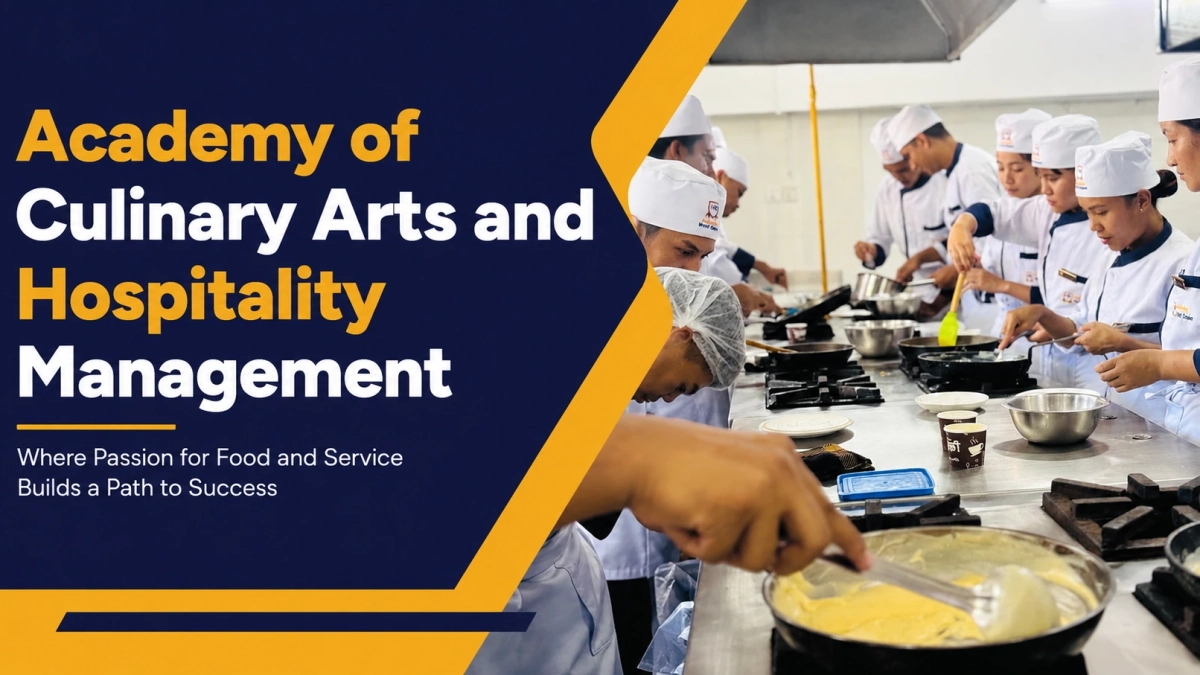
The academy of culinary arts and hospitality management, i.e., HWC (Hospitality World Campus) prepares students for careers in hotels, restaurants, tourism, food production, and customer service industries. Through practical training, industry exposure, and professional skill development, students gain the knowledge required to succeed in the global hospitality sector.
If you are considering a career in cooking, hotel management, or tourism or trying to decide which hospitality program is the right fit, this guide covers everything you need to know. From courses and skills to career paths, salaries, and admission requirements, every important question is answered here.
What Is an Academy of Culinary Arts and Hospitality Management?
An academy of culinary arts and hospitality management is an educational institution that trains students for professional careers in two closely connected industries food production and hotel or tourism services. These academies combine classroom learning with hands-on practical training so that graduates enter the workforce ready to work on their very first day.
Many students are unsure about the difference between culinary arts and hospitality management. Here is a clear breakdown:
Culinary Arts: covers professional cooking techniques, kitchen management, food safety and hygiene, international cuisines, pastry and bakery arts, menu planning, and culinary business operations. It prepares students for roles as chefs, cooks, and food production professionals.
Hospitality Management: covers hotel operations, front office procedures, housekeeping management, food and beverage service, customer relations, tourism, and event management. It prepares students for roles in hotels, resorts, airlines, cruise ships, and tourism companies.
Is Hospitality Management Only for Hotels?
No. Hospitality management extends across restaurants, airlines, cruise lines, tourism agencies, event companies, catering firms, and corporate hospitality. The skills are transferable across all of these sectors.
The global hospitality industry is one of the largest employment sectors in the world. The travel and tourism sector accounts for approximately 10 percent of global GDP and supports over 300 million jobs worldwide. This creates enormous and consistent demand for trained hospitality and culinary professionals every year.
What sets a good academy apart from other forms of education is the emphasis on practical learning. Students train in professional kitchens, work in mock hotel environments, serve real guests in training restaurants, and complete internships with industry partners. This hands-on approach ensures that theory and practice always go hand in hand.
Why Students Choose Culinary Arts and Hospitality Management

Students from many different backgrounds choose culinary arts and hospitality management programs each year. The combination of creative work, human interaction, fast career growth, and global job opportunities makes this one of the most appealing educational paths available today.
Passion for Cooking and the Food Industry
For many students, the decision begins with a genuine love of food. Culinary academies transform that passion into professional skill, teaching everything from knife techniques and flavor development to international cuisines and restaurant operations. A culinary education gives creative people the tools to build real, well-paying careers around something they care about deeply.
Interest in Hotel and Tourism Careers
Hotels, resorts, and tourism businesses need trained professionals at every level from front desk executives to general managers. Hospitality management programs create a clear career path within organizations that actively promote talent from within. Many large hotel chains run graduate management programs specifically to develop hospitality academy graduates into future leaders.
Global Job Opportunities
One of the strongest reasons students choose hospitality education is the international job market. Qualified hospitality professionals are in high demand across the Middle East, Europe, Southeast Asia, North America, and Australia. A diploma or degree from an accredited hospitality academy is a recognized qualification in most countries, opening doors to careers in some of the world’s most desirable destinations.
Creative and People-Oriented Career Paths
Both culinary arts and hospitality management attract people who enjoy working with others and solving problems in real time. These are not desk-bound careers. Professionals in this field work in dynamic environments, lead teams, interact with guests from around the world, and face new challenges every single day.
Fast Career Growth in the Hospitality Industry
The hospitality sector promotes talent quickly. A motivated graduate can move from an entry-level position to a supervisory or management role within two to three years. This growth speed is significantly faster than many other professional sectors, making it an attractive choice for ambitious students who want to advance quickly.
List of Academy of Culinary Arts and Hospitality Management Academies
| S.N. | Academy / College | Location | Offers / Programs |
|---|---|---|---|
| 1 | HWC | Jawalakhel, Lalitpur | Diploma in Culinary Arts, Diploma in Global Culinary Arts, Barista Training, Bakery, Hospitality Management |
| 2 | Academy of Culinary Arts & Hospitality Management (ACA) | Lagankhel, Lalitpur | Diploma in Culinary Arts, BHM, BBA, MBA, Barista, Baking, Bartending, Cooking Courses |
| 3 | Institute of Culinary Arts & Hospitality Management (ICAHM) | Butwal | Culinary Arts Training, Hospitality Management, Practical Hotel Industry Training |
| 4 | International Hotel Training School (IHTS) | Kathmandu | Diploma in Culinary Arts, DHM, Bakery & Pastry, Bartender, Barista, Housekeeping |
| 5 | StarChef Hospitality Pvt. Ltd. | Kathmandu | Culinary Arts, Hotel Management, Internship & Job Placement Programs |
| 6 | Nepal Tourism and Hotel Management College (NTHMC) | Kathmandu | BHM, Culinary Arts, Hotel Operations, Tourism & Hospitality Programs |
| 7 | Kantipur International College | Kathmandu | BHM, Hospitality Management, Culinary & Tourism Education |
| 8 | Silver Mountain School of Hotel Management | Kathmandu | International Hospitality Management, Culinary Arts, Hotel Training |
| 9 | Global Academy of Tourism and Hospitality Education (GATE) | Kathmandu | Culinary Arts, Hotel Management, Bakery, Professional Chef Training |
| 10 | Pokhara School of Tourism and Hospitality Management | Pokhara | Diploma in Hotel Management, Culinary Arts, Hospitality & Tourism Training |
Courses Offered in Culinary Arts and Hospitality Management Academies
Leading hospitality and culinary academies offer a wide range of programs designed for different career goals, timelines, and specializations. Here is a breakdown of the most common courses available:
Diploma in Culinary Arts

Duration: 6 to 18 months
This program is the most direct path for students who want to become professional chefs or food production specialists. It covers cooking techniques, kitchen operations, international cuisines, food safety and hygiene, portion control, and menu planning. Graduates work in restaurants, hotels, and catering businesses and can also start their own food ventures.
Best for: Students who want to become a professional chef or work in food production.
Hotel Management Programs
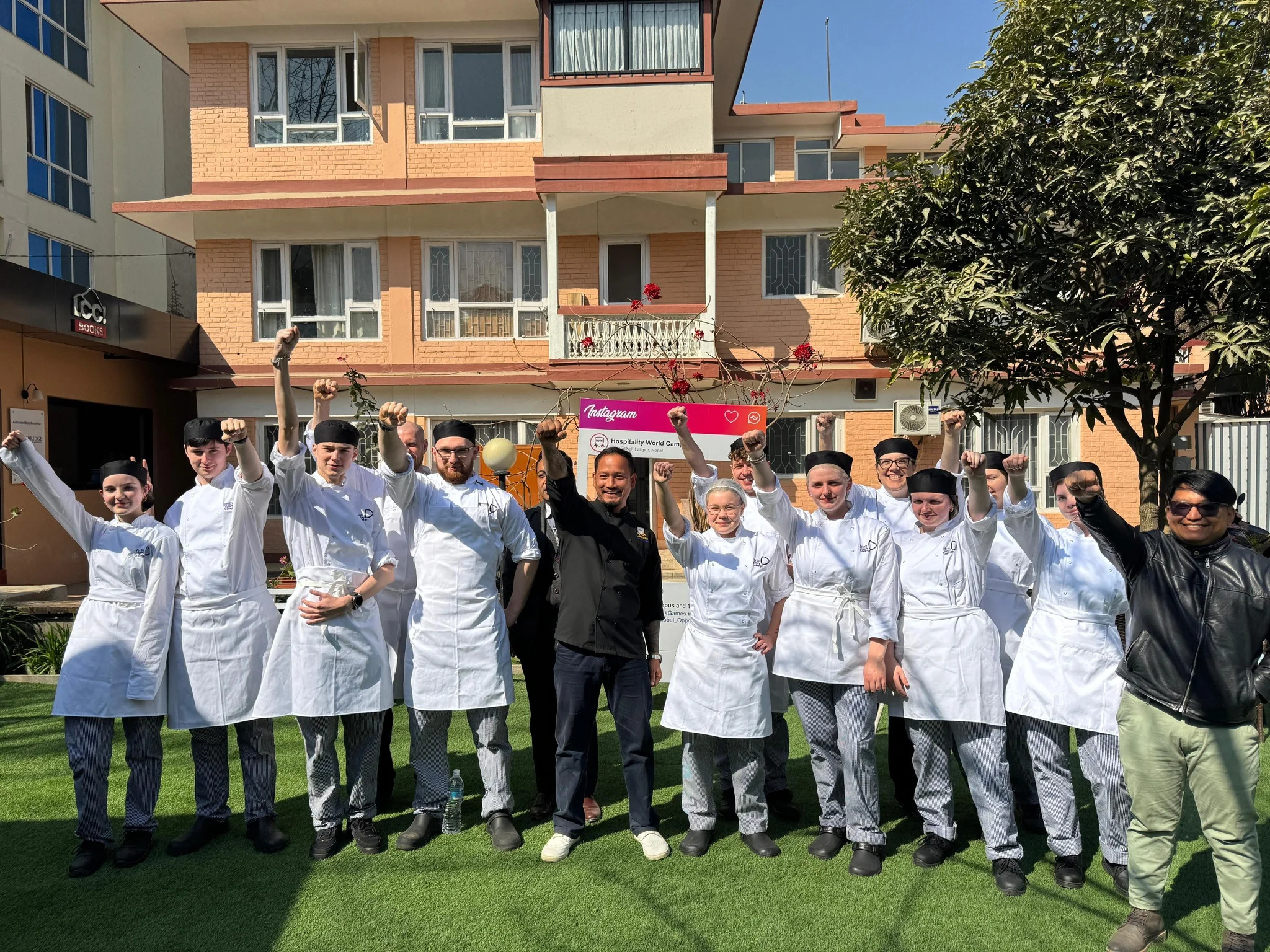
Duration: 1 to 3 years
Hotel management programs prepare students for operational and management roles across all hotel departments front office, housekeeping, food and beverage, sales, and guest relations. These programs include significant internship components, allowing students to train in real hotel environments before they graduate.
Best for: Students who want to build a career in hotel operations or management.
Bakery and Pastry Courses
Duration: 3 to 12 months
Pastry programs specialize in baked goods, desserts, chocolate work, bread-making, cake decorating, and patisserie arts. The global demand for skilled pastry chefs and bakers remains consistently high in luxury hotels, fine dining restaurants, and specialty bakeries worldwide.
Best for: Students who want to work as pastry chefs or open their own bakery business.
Food Production Training
Food production programs focus on the commercial and industrial side of cooking bulk preparation, food science, nutrition awareness, supply chain management, and quality control standards. Graduates find roles in catering companies, institutional kitchens, airline catering, and food manufacturing businesses.
Front Office Operations
This course trains students in guest check-in and check-out procedures, reservation management, property management systems, communication skills, and guest complaint handling. Front office professionals are the first point of contact between a hotel and its guests, making this one of the most visible and important roles in any property.
Food and Beverage Service
Food and beverage programs cover restaurant service, banquet operations, bar management, wine and beverage knowledge, and event catering. This specialization prepares students for roles in restaurants, hotels, cruise ships, and event companies. Food and beverage is one of the most actively hired departments in the hospitality industry globally.
Housekeeping Management
Housekeeping programs train students in cleanliness standards, linen management, room inspection, cleaning protocols, team supervision, and quality control. Experienced housekeeping managers are essential in large hotel properties and luxury resorts, and there is consistent hiring demand for trained professionals in this area.
Hospitality Leadership Programs
Leadership programs are designed for students who want to move into management roles faster. They combine operational hospitality knowledge with business management, finance basics, human resources, and strategic planning. These programs bridge the gap between operations and executive management within hospitality organizations.
Which course has the highest salary potential?
Hotel management and food and beverage management programs generally offer the strongest salary growth over time, especially for graduates who move into director and general management roles within luxury hotel brands.
Skills Students Learn in Hospitality and Culinary Education
Beyond technical knowledge, hospitality and culinary programs develop a broad set of professional skills that serve graduates throughout their entire careers, including in industries beyond hospitality itself.
Customer Service Skills
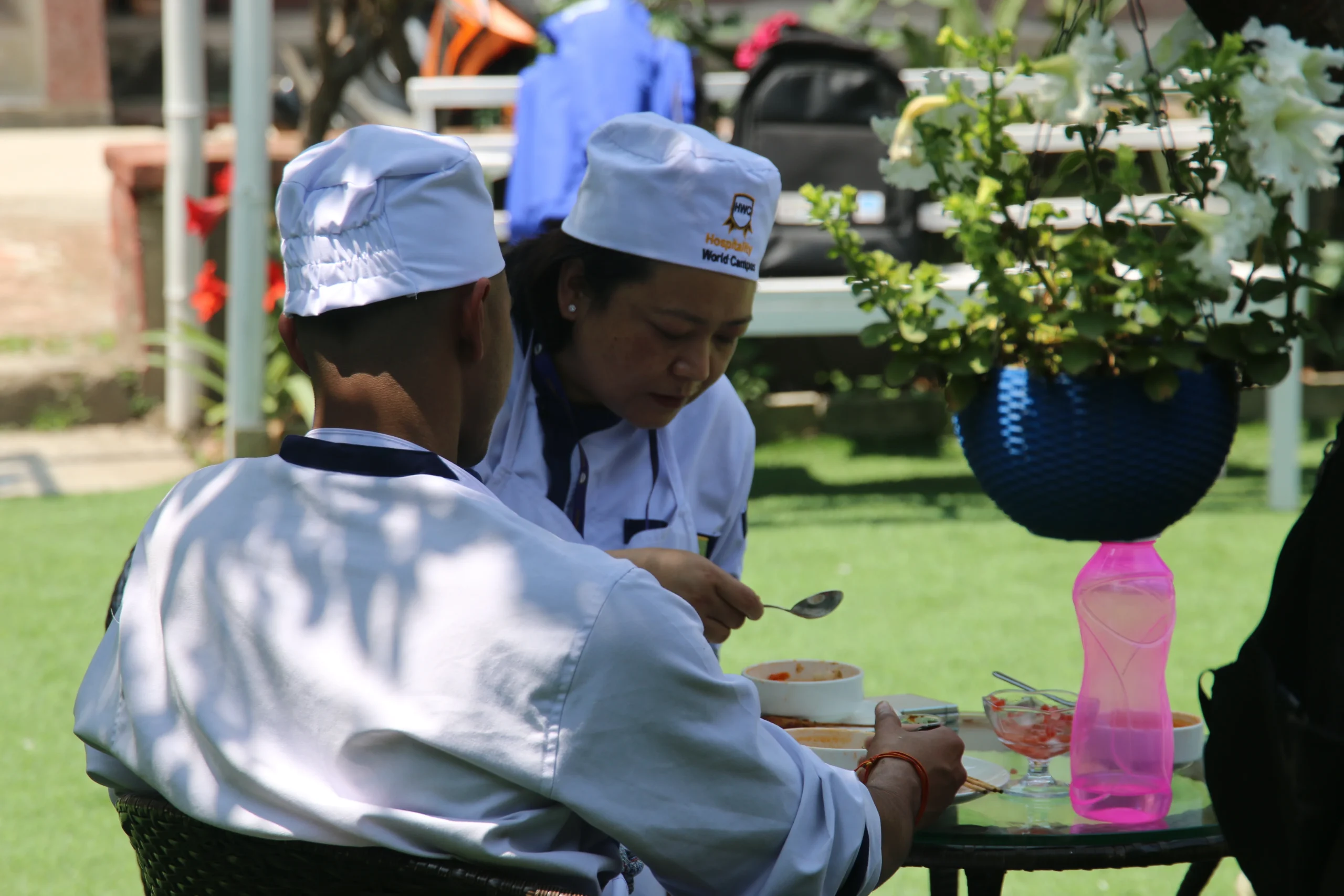
Every hospitality program places guest satisfaction at the center of its teaching. Students learn how to anticipate guest needs, handle complaints calmly and professionally, communicate clearly and courteously, and create positive experiences that keep customers returning. These skills are directly transferable into any client-facing professional environment.
Communication and Soft Skills
Hospitality professionals work with diverse teams and international guests every day. Programs develop confidence in professional communication both verbal and written and build cultural awareness essential for working in multinational environments. Employers consistently rank strong soft skills as the most important quality they look for when hiring hospitality graduates.
Kitchen and Food Preparation Techniques
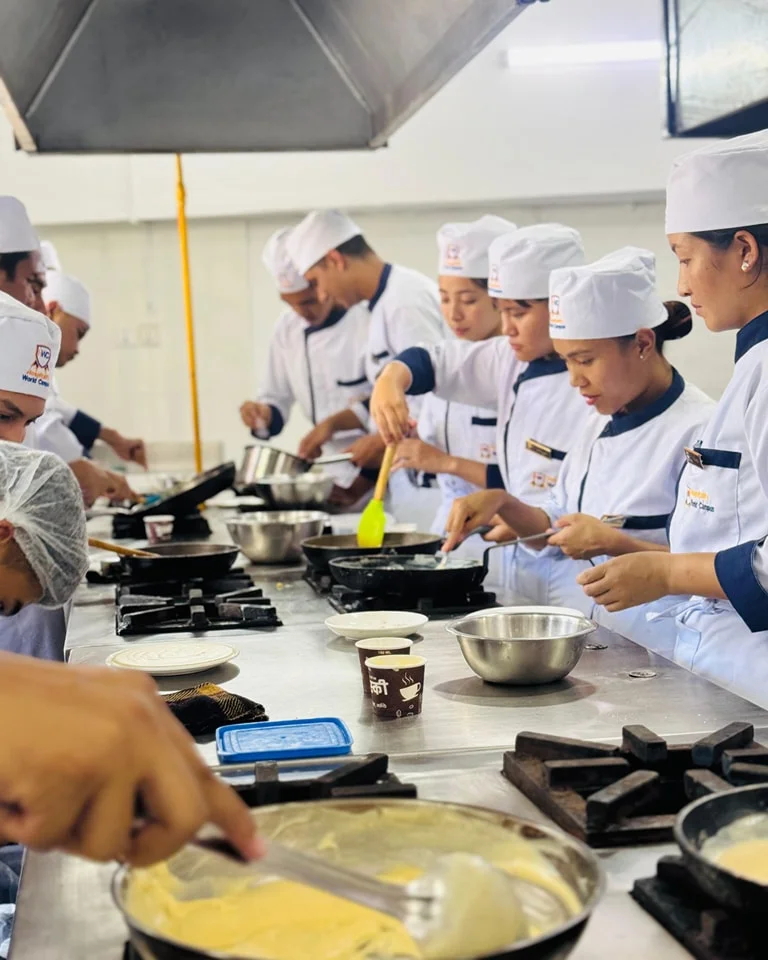
Culinary students develop hands-on mastery in knife skills, cooking methods such as grilling, sautéing, braising, baking, and steaming, food presentation, flavor profiling, portion control, and kitchen safety. These technical competencies form the core foundation of any professional chef’s career and are tested and refined throughout the program.
Hotel Operations Management
Students learn how every department in a hotel works and how they work together. Understanding the full picture of hotel operations, from housekeeping and front office to sales and food service, equips graduates to manage teams, solve cross-departmental problems, and contribute meaningfully to overall property performance from early in their careers.
Leadership and Team Management
Both kitchens and hotels run on well-coordinated teams. Programs develop skills in delegation, shift scheduling, performance management, staff motivation, and conflict resolution. These leadership skills ensure that graduates are ready for supervisory responsibilities from the moment they enter their first role, not years down the line.
Problem-Solving in the Hospitality Industry
Hospitality is a real-time industry where situations change quickly and things rarely go exactly as planned. Students develop situational thinking how to handle a fully booked hotel during an unexpected event, manage a guest complaint during peak service hours, or address a kitchen emergency without disrupting the dining experience. This kind of practical problem-solving cannot be learned from books alone.
Career Opportunities After Hospitality and Culinary Studies
One of the first questions students ask before enrolling in a hospitality program is whether they will actually find a job after graduation. The short answer is yes and the variety of available career paths is wider than most students expect.
Professional Chef
Industry: Restaurants, Hotels, Catering Companies, Resorts
Starting Salary: $25,000 to $45,000 per year (varies by country and employer)
Career Path: Commis Chef → Demi Chef → Sous Chef → Head Chef → Executive Chef
The chef career path is one of the most clearly structured in any industry. With experience and continuous skill development, a professional chef can reach executive positions in luxury hotels and fine dining restaurants or build an independent restaurant business.
Hotel Manager
Industry: Hotels, Resorts, Serviced Apartments
Starting Salary: $35,000 to $60,000 per year
Career Path: Assistant Manager → Department Manager → Hotel Manager → General Manager
Hotel managers oversee daily operations, manage staff, maintain service standards, and drive property revenue. This is one of the highest-earning roles available to hospitality management graduates over the long term.
Restaurant Supervisor
Industry: Restaurants, Hotel Dining, Clubs
Starting Salary: $22,000 to $38,000 per year
Restaurant supervisors manage daily dining operations, lead service teams, handle guest feedback, and coordinate with kitchen staff. This role is a common entry point for culinary and food service graduates who prefer front-of-house work.
Front Office Executive
Industry: Hotels, Resorts, Serviced Residences
Starting Salary: $20,000 to $35,000 per year
Front office executives manage guest arrivals, departures, inquiries, and reservations. This is a guest-facing role that requires excellent communication skills and a strong service orientation. It is one of the most common starting roles for hospitality management graduates in international hotel brands.
Food and Beverage Manager
Industry: Hotels, Restaurants, Cruise Lines, Event Venues
Starting Salary: $30,000 to $55,000 per year
Food and beverage managers oversee all dining and drinks operations within a property restaurant service, bar management, banquets, and in-room dining. This is a high-responsibility role with strong salary growth, especially in luxury hotel brands.
Cruise Line Hospitality Staff
Industry: Cruise Industry
Starting Salary: $18,000 to $36,000 per year, plus free accommodation, meals, and travel
Cruise lines hire trained hospitality professionals for cabin steward roles, restaurant service, bar operations, and guest entertainment coordination. The additional benefits of free housing and global travel make this a popular early-career option for graduates who want international experience quickly.
Airline Catering Careers
Industry: Aviation Catering and In-Flight Services
Starting Salary: $22,000 to $40,000 per year
Airline catering companies produce thousands of meals daily for international flights. They hire trained culinary and hospitality graduates for food production, quality control, logistics, and supervisory roles in their large-scale catering kitchens.
Entrepreneurship in the Food Business
Many culinary arts graduates use their training and industry experience to start their own businesses restaurants, cafes, catering companies, home bakeries, food trucks, or private dining services. A culinary academy education provides both the technical skills and the business awareness needed to run a food business successfully.
Can I work abroad after hospitality education?
Yes. Hospitality is one of the most internationally portable professions available. Countries including the UAE, Maldives, Singapore, UK, Germany, Australia, Canada, and the United States regularly hire qualified hospitality graduates from around the world. Many luxury hotel chains actively recruit from hospitality academies in South Asia, Southeast Asia, and Africa for their international properties.
Benefits of Joining an Academy of Culinary Arts and Hospitality Management
Not all hospitality education delivers the same outcomes. A specialized academy provides structured advantages that self-study programs and general university degrees simply cannot match.
Industry-Focused Practical Training
Academies design their programs around the actual standards and expectations of the hospitality industry. Students cook in professional kitchens, practice hotel procedures at real front desks, and work through real service scenarios before they graduate. This practical exposure means that a qualified academy graduate is genuinely job-ready on their first day at work — something employers value highly.
Internship and Placement Support
Beyond the classroom, the most valuable thing a good academy offers is access to its industry network. Leading hospitality academies maintain active partnerships with hotel chains, restaurant groups, resorts, and catering companies. These relationships create internship placements that frequently convert into permanent job offers. A student who performs well during their internship at a partner hotel often receives an offer before they have even formally graduated.
Experienced Faculty and Mentorship
The best programs employ instructors who have worked in the industry themselves — executive chefs, former hotel managers, and experienced hospitality consultants who bring real-world knowledge into every class. This kind of mentorship gives students practical career guidance, industry connections, and honest insight into what the profession actually involves day to day.
Modern Kitchen and Hospitality Labs
Professional-grade kitchens, training restaurants that serve real guests, mock hotel rooms, and beverage labs give students daily access to the same equipment and environments they will work in throughout their careers. Learning on industry-standard tools eliminates the adjustment period that graduates from less practical programs typically face when entering the workforce.
International Exposure Opportunities
Many academies offer study tours, international exchange programs, or collaborative programs with overseas hospitality institutions. This exposure develops cultural awareness, strengthens language confidence, and builds professional networks that span multiple countries — all genuinely valuable in an industry that serves guests from every part of the world.
How to Choose the Right Hospitality and Culinary Academy
Selecting the right academy is one of the most important decisions a student will make before starting their hospitality career. Here are the key factors to evaluate carefully before enrolling in any program:
Accreditation and Certifications
Verify that the academy is formally recognized by national education authorities or international hospitality accreditation bodies. Accredited qualifications carry significantly more weight with employers than unrecognized certificates. Before enrolling, confirm that the qualification you will receive is recognized in the country or region where you intend to work.
Placement Record
Ask directly about the academy’s placement rates. Strong institutions publish their placement statistics and can provide employer references or alumni contacts. A consistently high placement rate is the clearest evidence that a program actually prepares students for the workforce — not just for examinations.
Practical Training Facilities
If possible, visit the campus before enrolling. Professional kitchens, hospitality training labs, and modern equipment indicate genuine investment in student learning outcomes. Outdated or poorly maintained facilities are a reliable indicator of outdated teaching practices.
Internship Opportunities
Find out where previous students have completed their internships. Active partnerships with recognized hotel brands, restaurant chains, or international hospitality groups are a strong indicator that the academy has real credibility within the industry, not just on paper.
Industry Reputation
Research what employers, working professionals, and alumni genuinely think of the academy. Online reviews, testimonials from current students, and recognition from industry bodies all help build an accurate picture of what the experience and qualification are actually worth in the job market.
Course Curriculum and Specializations
Review the course content carefully before applying. A strong program should include both theoretical foundations and extensive practical work, with content that is reviewed and updated regularly to reflect current industry practices. Ask when the curriculum was last revised and what changes were made.
Faculty Background
Find out whether the instructors have genuine industry experience or are purely academic. Faculty who have worked as executive chefs, hotel managers, or hospitality professionals teach in ways that are directly connected to real career scenarios something that purely academic instructors often cannot replicate.
Admission Process for Culinary Arts and Hospitality Management Courses
The admission process for hospitality programs is generally more accessible than many other academic fields. Here is a step-by-step breakdown of what most academies require:
Step 1: Eligibility Criteria
Most certificate and diploma programs accept students who have completed secondary school education (Grade 10 or equivalent). Degree-level programs typically require Grade 12 or equivalent. Some programs do not apply strict academic cut-offs and instead focus on motivation, communication ability, and service orientation during the selection process.
Step 2: Application Process
Applications can usually be submitted online through the academy’s website or in person at the admissions office. Most academies require a completed application form, recent passport-size photographs, and copies of educational certificates. Some programs run rolling admissions throughout the year, while others have fixed intake periods typically at the start of each semester.
Step 3: Entrance Exams or Interviews
Many hospitality academies conduct an admission interview or basic aptitude assessment rather than a formal written entrance exam. The interview is designed to assess communication skills, motivation, and service-mindedness qualities that matter far more in hospitality careers than academic scores alone. Students should prepare to speak clearly about why they are interested in the industry.
Step 4: Required Documents
Standard documents typically include academic certificates and mark sheets, a government-issued identity document, passport-size photographs, and a character or conduct certificate from the previous institution. International students may also need to provide English language proficiency scores and a copy of their passport.
Step 5: Course Fees and Scholarships
Fees vary widely between programs, institutions, and countries. Many academies offer merit-based scholarships, early admission discounts, or installment payment plans. It is always worth asking each academy directly about available financial support options, as this information is not always prominently advertised but is often available to students who enquire.
Future Trends in Culinary Arts and Hospitality Industry
The hospitality industry is changing faster than at any previous point in its history. Students entering this field today will work in an environment shaped by technology, sustainability, global cuisine diversity, and rapidly evolving guest expectations. Understanding these trends helps students and institutions prepare effectively for what is ahead.
Digital Hospitality Services
Mobile check-in, AI-powered guest service chatbots, contactless payment systems, and app-based concierge services are now standard features in modern hotel properties worldwide. Hospitality graduates who understand how to use and manage these digital tools alongside traditional service skills have a clear competitive advantage in the current hiring market.
Sustainable Hospitality Practices
Hotels and restaurants face increasing pressure from both regulators and guests to reduce waste, source food locally, minimize carbon footprints, and operate more responsibly. Sustainability is no longer just a marketing position it is becoming a core operational and management skill required at every level in all major hotel brands.
International Cuisine Training
Guest expectations around food diversity are growing. Training in Japanese, Korean, Middle Eastern, Southeast Asian, and Latin American cuisines alongside traditional European cooking techniques gives culinary graduates significantly wider career options and higher market value particularly in international luxury hotels and destination resort kitchens.
AI and Technology in Hospitality
Revenue management systems, AI-powered demand forecasting, automated kitchen equipment, and robot-assisted service are entering more properties every year. The hospitality professionals who will thrive in this environment are those who can work alongside technology — using it to enhance service quality while maintaining the human connection that guests still fundamentally value.
Luxury Hospitality and Tourism Growth
The luxury hospitality segment is growing faster than mid-market and budget categories. High-net-worth travelers demand exceptional, highly personalized service experiences. Training in luxury service standards, personalized guest relations, and high-end food and beverage opens doors to the most prestigious and highest-paying roles in the entire industry.
Frequently Asked Questions
What is culinary arts and hospitality management?
Culinary arts covers professional cooking, food production, kitchen techniques, and culinary business skills. Hospitality management covers hotel operations, front office, housekeeping, food and beverage services, and tourism management. Together, they prepare students for careers across the global food service and hotel industry.
Is hospitality management a good career?
Yes. Hospitality management offers strong employment demand, international career mobility, and faster-than-average promotion cycles compared to many other industries. The global tourism and food service sectors continue to grow, creating a consistent need for trained professionals at every level from entry roles to general management.
What jobs can I get after hospitality studies?
Graduates pursue careers as professional chefs, hotel managers, restaurant supervisors, front office executives, food and beverage managers, housekeeping managers, cruise line hospitality staff, airline catering professionals, and food business entrepreneurs. The variety of career paths is one of the most appealing aspects of a hospitality education.
How long does culinary training take?
Culinary programs range from 6-month short courses and certificates to 1 to 3-year diploma and degree programs. The duration depends on the level of specialization and the type of institution. Certificate programs are suitable for focused skill development, while diploma and degree programs provide comprehensive preparation for long-term career progression.
Can I work internationally after hospitality education?
Yes. Hospitality is a genuinely globally portable profession. Qualifications from accredited academies are recognized in most major hiring countries. The UAE, Maldives, Singapore, UK, Australia, Canada, and many European countries actively recruit qualified hospitality graduates from around the world throughout the year.
What skills are required for hospitality careers?
The most important skills are customer service orientation, clear and professional communication, teamwork, problem-solving under pressure, attention to detail, and cultural awareness. Technical skills such as cooking methods or property management systems are also essential depending on the specific role, but employers consistently prioritize strong soft skills above all other hiring criteria.
Which hospitality course is best for becoming a chef?
The Diploma in Culinary Arts is the most direct and well-recognized route to becoming a professional chef. This program provides structured training in cooking techniques, kitchen management, international cuisines, and food safety. Students who want to specialize further in pastry, for example should look for programs that offer dedicated bakery and pastry modules within or alongside their core culinary diploma.
Do hospitality academies provide placements?
Most established hospitality academies include internship programs and formal placement support as a structured part of their curriculum. The quality and reach of placement support varies between institutions. Before enrolling, prospective students should ask specifically about placement rates, active employer partnerships, and where previous graduates are currently employed this information is the most reliable indicator of real placement support.
Start Your Culinary and Hospitality Career Today
Culinary arts and hospitality management offer one of the most dynamic, people-centered, and internationally rewarding career paths available to students today. The right academy will give you practical training, industry connections, and professional skills that open doors in hotels, restaurants, cruise lines, airlines, and tourism businesses around the world.
Whether your goal is to become a professional chef, manage a five-star hotel, or build your own food business an academy of culinary arts and hospitality management is the foundation that makes it possible.
Ready to Start Your Hospitality Career?
Culinary arts and hospitality management offer one of the most dynamic, people-centered, and internationally rewarding career paths available today. The right academy will give you the practical training, industry connections, and professional skills to build a career you are genuinely proud of.