
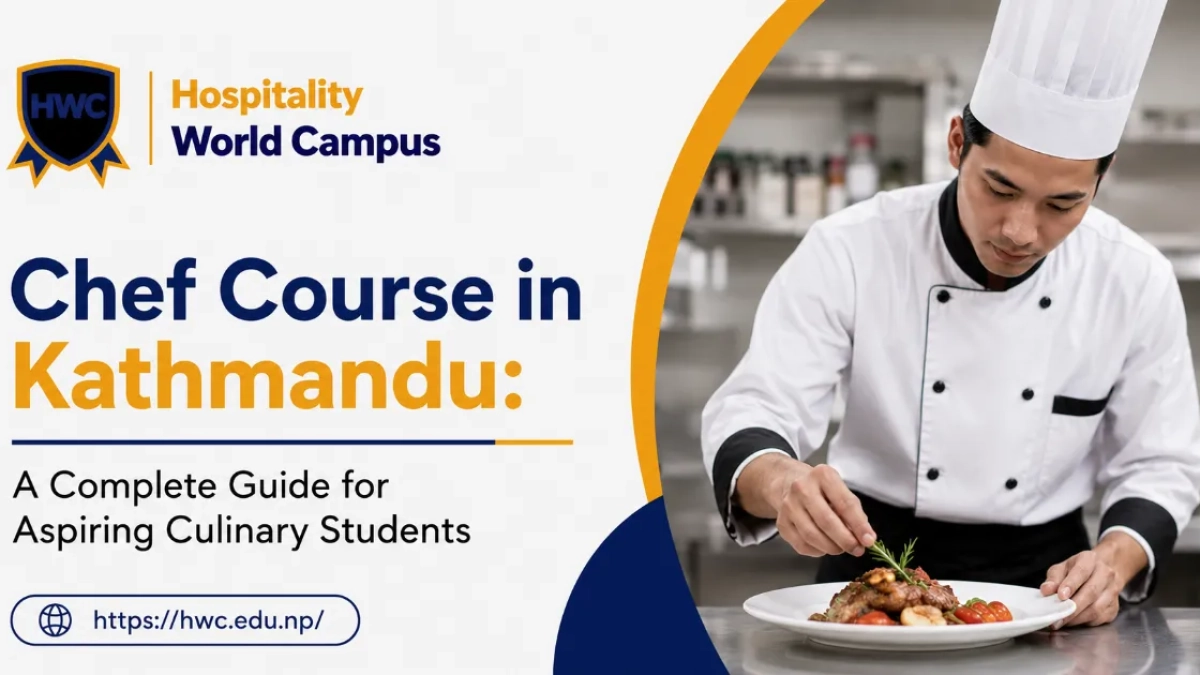
If you are searching for a chef course in Kathmandu, the short answer is this: Kathmandu Valley today has a healthy mix of CTEVT-affiliated vocational institutes; private hospitality colleges like HWC (a unit of LCCI GQ, an award-winning and one of the leading organizations in soft skills and management skills training and approved and quality assured by the Scottish Qualifications Authority (SQA), Scotland, and benchmarked at the Scottish Credit and Qualifications Framework (SCQF) and European Qualifications Framework (EQF), which makes our students globally competitive); and government-backed training centers such as NATHM, each offering programs ranging from one-month cooking courses to full diploma programs like the Diploma in Global Culinary Arts, Professional Chef Course Advanced, and the right choice depends on your budget, your career goal (local job vs. international placement), and how much practical kitchen exposure the institute actually gives you.
Institutes such as Hospitality World Campus (HWC) in Jawalakhel, Lalitpur, along with NATHM, IIG, IHM, ACA, and several CTEVT-affiliated centers, together make up most of the culinary education options available in the valley, and this guide walks through what each type of course involves, what it costs, and how to pick one that actually leads somewhere.
Nepal’s food and hospitality sector has been growing steadily, driven by tourism, an expanding boutique hotel and café scene, and a rising number of fine-dining restaurants in Kathmandu. This growth is precisely why a culinary arts course in Kathmandu has become a genuinely practical career option rather than a fallback choice. A good culinary program does not just teach recipes; it builds discipline, hygiene standards, kitchen management ability, food costing knowledge, and exposure to international cuisine that recruiters actually look for.
Why Choose a Chef Course in Kathmandu
Kathmandu is the natural hub for hospitality college in Kathmandu options because it concentrates the country’s five-star hotels, international restaurant chains, catering companies, and hospitality training bodies in one place. A few reasons students consistently choose the capital over other cities:
- Industry access: Most 5-star hotels, luxury resorts, and high-end restaurants used for internships and placements are based in or near Kathmandu.
- CTEVT and international recognition: Many institutes are affiliated with the Council for Technical Education and Vocational Training (CTEVT), which means certifications are recognized for employment and, in several cases, for skill-based migration abroad.
- Wider course variety: From short-term commercial cooking courses to full diplomas in culinary arts, Kathmandu offers more program depth and specialization (bakery and pastry, barista training, international cuisine) than most other cities in Nepal.
- Networking and mentorship: Being close to the industry means guest chef sessions, live kitchen exposure, and direct hotel tie-ups are more common in Kathmandu-based institutes.
Types of Chef and Culinary Courses Available in Kathmandu
Before comparing colleges, it helps to understand that “chef course” is an umbrella term. In Kathmandu, you will generally come across four categories:
1. Short-Term Cooking Courses (1–3 Months)
These are entry-level, skill-building courses aimed at hobbyists or those testing their interest before committing to a longer program. CTEVT’s Special Cooking Course, for example, runs for about one month and focuses on core techniques.
2. Basic and Professional Cook Training (3–6 Months)
CTEVT-affiliated Basic Cooking (3 months) and Professional Cook Training (6 months) programs are more structured, covering food safety, kitchen equipment handling, and practical cooking skills, with the professional track designed to prepare students for direct employment or self-employment.
3. Certificate and Diploma Programs (6–12 Months)
This is where most serious students land. A diploma in culinary arts Kathmandu program typically covers food preparation, presentation, nutrition, menu planning, baking and pastry, and hands-on kitchen training, often combined with an internship component. HWC’s Diploma in Global Culinary Arts (DGCA), for instance, runs for 12 months structured as 6 months of training plus a 6-month internship, giving students real workplace exposure before graduation.
4. Advanced and Hospitality Management Combined Programs
Some students prefer pairing culinary training with broader hospitality management education — useful if the long-term goal is kitchen leadership, restaurant management, or hotel operations rather than only cooking.
Best Colleges and Institutes for Chef Courses in Kathmandu
There is no single official “best” college the right one depends on your goals but the institutes most commonly considered when researching a best college for chef course in Kathmandu include:
- NATHM (Nepal Academy of Tourism and Hotel Management): A government-backed institution, widely respected and often ranked among the top hotel management and hospitality training providers in Nepal.
- Hospitality World Campus (HWC), Jawalakhel, Lalitpur: A private hospitality and culinary college offering the Diploma in Global Culinary Arts, Diploma and Advanced Diploma in Hospitality Management, a Professional Chef Course, and certificate programs in bakery, pastry, and barista skills. It is a unit of LCCI GQ and follows a mentorship-based, small-class model with a 12-month diploma structure that pairs training with an internship.
- IIG (International Institute of Gastronomy): Offers a CTH (UK)-accredited, CTEVT-certified Level II Diploma in Culinary Skills with a significant practical training component and internship placements within the Kathmandu Valley.
- IHM (College of International Hotel Management), Satdobato: A long-running culinary arts program affiliated with the National Skills Testing Board (NSTB) under CTEVT, known for its hands-on, practical-first teaching approach.
- ACA (Academy of Culinary Arts, Management & IT): Offers a mix of Plus 2, diploma, and culinary/bakery/barista courses under one campus.
- GATE (Global Academy of Tourism and Hospitality Education): A CTEVT-affiliated institute offering cook training programs.
- CTEVT-affiliated vocational centers: Several government-recognized centers across Kathmandu district run the standard 1-, 3-, and 6-month cook training courses at lower cost than private diploma colleges.
When shortlisting, it’s worth physically visiting each campus kitchen, checking real (not marketed) internship placement records, and speaking to alumni before enrolling the difference between institutes often comes down to actual kitchen hours and industry tie-ups rather than what’s advertised.
Eligibility for Chef Courses in Kathmandu
Eligibility varies slightly by institute and course level, but general patterns include:
- After SEE (chef course after SEE in Kathmandu): Some certificate-level and vocational cook training programs accept students directly after SEE, often from age 16 onward.
- After +2 (chef course after +2 in Kathmandu): Diploma-level programs, such as HWC’s DGCA, typically require a minimum SLC/SEE grade (for example, D+/GPA 1.6) along with a similar minimum in English and set a minimum age (commonly 17 years and above).
- No entrance exam, skill-based selection: Most culinary programs prioritize aptitude and interest over academic scores, which is one reason culinary arts is considered accessible to a wide range of students.
Chef Course Fees in Kathmandu
Fees vary considerably depending on course length, institute reputation, and whether the program includes an internship or international certification body affiliation (such as CTH or City & Guilds). As a general pattern:
- Short CTEVT cook training courses (1–6 months) are the most affordable option, aimed at quick, skill-based entry into the workforce.
- Certificate courses in bakery, pastry, or barista skills sit in a mid-range price bracket.
- Full diploma programs (10–12 months, including internship) at private hospitality colleges cost more but generally offer stronger placement support, better kitchen facilities, and internationally aligned curriculum.
Because fee structures change and differ by intake, it’s best to request current fee details directly from the institute’s admissions office rather than relying on numbers that may be outdated. Most colleges, including HWC, offer a free consultation call or campus visit where exact fees, scholarship options, and payment plans are explained.
Career Scope After a Chef Course in Nepal
A common question is simply: what jobs can I get after completing a chef course? Graduates of culinary programs in Kathmandu typically move into roles such as:
- Commis chef / line cook in hotels and restaurants
- Pastry chef or baker in bakery and patisserie units
- Sous chef, and eventually head chef, with experience
- Kitchen or food production manager
- Catering and banquet chef
- Self-employed roles: opening a café, bakery, or catering business
International placement is also a significant draw. Graduates from CTEVT-recognized and internationally accredited programs have gone on to work in the Gulf, Australia, on cruise ships, and in luxury resorts abroad, since a recognized culinary qualification from Nepal is increasingly accepted as a valid skill-migration credential.
How to Become a Chef in Nepal: A Simple Roadmap
- Decide your entry point after SEE for early vocational training, or after +2 for a full diploma program.
- Shortlist 3–4 institutes based on curriculum, CTEVT/CTH affiliation, and internship record not just advertising.
- Visit the campus kitchen in person before enrolling; a good culinary program is judged by hands-on training hours, not brochures.
- Choose a course length that matches your goal a short course to test interest, or a diploma if you’re serious about a long-term chef career.
- Use the internship period seriously this is where most real hiring decisions and international placement opportunities originate.
- Keep building specialization bakery and pastry, international cuisine, or kitchen management are common specializations that increase employability after the base course.
Frequently Asked Questions
Which is the best college for a chef course in Kathmandu?
There isn’t one universal answer. NATHM is the leading government institution, while private colleges like HWC, IIG, and IHM are strong options depending on whether you prioritize a structured diploma with internship, international accreditation, or a specific specialization like bakery and pastry.
How much does a chef course cost in Kathmandu?
Costs range from relatively affordable short-term CTEVT cook training courses to higher-priced full diploma programs at private institutes. Exact fees should be confirmed directly with each institute since they vary by intake and course length.
What qualifications are required for a chef course in Nepal?
Most short vocational courses accept students from age 16, often after SEE. Diploma-level programs usually require a minimum SEE/SLC grade (commonly D+/GPA 1.6) and a minimum age of around 17.
How long is a chef course in Kathmandu?
It depends on the level: special cooking courses run about one month, basic cook training about three months, professional cook training around six months, and full diploma programs typically 10–12 months, often including an internship.
Can I join a chef course after SEE?
Yes. Several vocational and certificate-level cook training programs accept students directly after SEE, while full diploma programs generally set a slightly higher entry bar.
Which culinary college has the best placement in Kathmandu?
Placement strength depends less on the college’s name and more on its actual hotel and restaurant tie-ups. Ask any shortlisted institute for verifiable placement data and alumni contacts before enrolling, rather than relying on marketing claims alone.
Is a culinary arts diploma worth it in Nepal?
For students genuinely interested in cooking, yes a diploma builds structured technical skill, hygiene discipline, and industry exposure through internships, which is difficult to gain through informal experience alone. It’s also increasingly recognized for job opportunities abroad.
What jobs can I get after completing a chef course?
Common entry roles include commis chef, line cook, and baker, progressing to sous chef, head chef, kitchen manager, or catering chef with experience, along with the option to start an independent bakery, café, or catering business.
Choosing a chef course in Kathmandu ultimately comes down to matching the course length and institute type to your career goal. Whether you’re weighing a short CTEVT certificate against a full diploma with internship, spend time in the actual kitchen facilities and talk to current students before making a decision that conversation will tell you more than any prospectus.